About Alvin
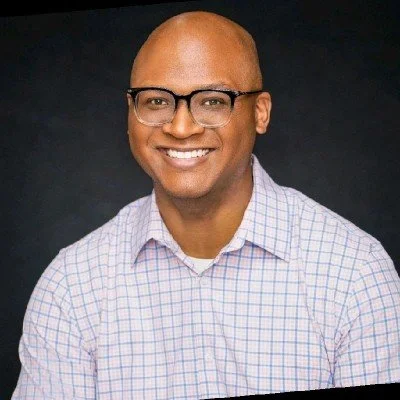
I am a strategist, designer, futurist, and organizational transformation leader whose work sits at the intersection of strategic foresight, organizational change, service design, community design, and operational strategy. For 17 years, I have led change across technology, design, government, and social impact—often in moments of transition: scaling, restructuring, rebuilding culture, responding to crisis, or shifting to fundamentally new ways of working. I help leaders see the full system, identify friction, and redesign how organizations work so strategy becomes lived practice—not just an aspiration.
Most recently, I served as an Experience & Service Design Lead at Capital One, where I helped shape organization design, culture strategy, and people experience for a 700-person Digital Design organization. Before that, I was the founding Senior Equity Design Strategist for Capital One’s Equity by Design Program. Equity by Design held shared VP and C-suite-level accountability across Technology, Design, and HR that developed and delivered equity-centered, trauma-informed creative solutions for employee experiences, reframed the way that Capital One did design and built culture, and centered external communities and customers to ensure they were minimizing and alleviating community harm. My work brought a community-centered design and service-design lens to operating model clarity, leadership alignment, organizational culture, and large-scale change, contributing to initiatives recognized by Fast Company’s World Changing Ideas.
Previously, I was appointed by the Governor’s Office as Illinois’ first-ever Chief People Officer at the Illinois Department of Human Services, where I transformed workforce experience and talent systems for a 14,000-person, $9B public agency while leading a department of more than 100 people. I also served as a Senior Business Operations Advisor, leading strategy, operations, and service design for Illinois’ statewide COVID-19 emergency response, stewarding a $10MM+ budget and redesigning systems that supported roughly one-third of the state’s population.
Earlier in my career, I was the founding Director of Operations at Greater Good Studio, a social innovation design firm where I helped drive a 50% increase in revenue in a single year, and during an almost year long post in Shanghai, I led cross-border change management for Abbott Laboratories during a major Chinese acquisition. I hold three certifications from the Institute for the Future, deepening my practice in foresight, scenario planning, and experiential futuring, and I hold advanced PROSCI certifications in change management.
Other relevant points of reference:
I’ve created and illustrated tools—card decks on organizational effectiveness and design futures—that are used by dozens of teams across government, healthcare, academia, nonprofits, and tech.
I’m an occasional artist, exploring creativity, hope, and the future through graffiti, illustration, zines, and Afrofuturism.
I’ve written a children’s book, A Kids Book About Radical Dreaming, with DK Publishing.
I’ve spent 3 years of my life outside of the United States - 1 in the United Kingdom and 2 in Mainland China.
My Gallup Top 5 are: Connectedness | Strategic | Arranger | Individualization | Futuristic
Why Are We Named “The Orange Bureau” ?
Orange represents energy, creativity, possibility, and the spark of adaptability that exists within every organization, institution, and community.
Bureau reflects my belief that institutions, systems, and bureaucracy are not inherently the problem. They are the infrastructure through which people organize, make decisions, deliver services, and turn values into action. When that infrastructure stops serving people, it can erode trust. When it is designed to be responsive, effective, and worthy of trust, it can help communities thrive.
In other words, organizations and institutions already contain much of the capacity they need to change. Our role is to catalyze that capacity—helping leaders redesign strategy, culture, operations, and systems so their organizations can adapt, serve people better, and build the trust that makes institutions work.
CONNECT WITH US